 Sign in
Best VPS Provider Reddit Threads: How to Read the Advice
Reddit threads about the best VPS provider can be useful, but only if you read them as evidence rather than as a verdict. This guide shows how to weigh forum advice, what to check for yourself, and how to turn it into a sensible decision when you buy VPS hosting.
Why people search Reddit for VPS advice
Hosting marketing all sounds alike, and most comparison sites earn money from the links they publish. So buyers turn to forums to hear from people who run servers and have no reason to sell anything. That instinct is sound. A real user describing a real outage or a helpful support reply is worth more than a polished feature grid.
The problem is that a forum thread is not a survey. It is a small, self selected group of people, posting at one moment in time, about their own use case. What a thread can give you is a list of questions and things to watch for. What it cannot give you is a single correct answer for your project.
What Reddit gets right
Forum discussions are good at a few things that official pages rarely cover:
- Failure stories: people describe how a problem unfolded, how long support took and how it ended.
- Plain language explanations: experienced users often explain terms such as oversold or steal time in clearer words than documentation does.
- Fit for a niche: someone running the same software as you can tell you what mattered in practice.
- Setup tips: many threads include useful commands, configuration tips and security advice.
- Questions you had not thought of: reading a few threads shows you what buyers wish they had checked first.
Where forum advice goes wrong
The same threads have some predictable weaknesses, and it helps to keep them in mind as you read.
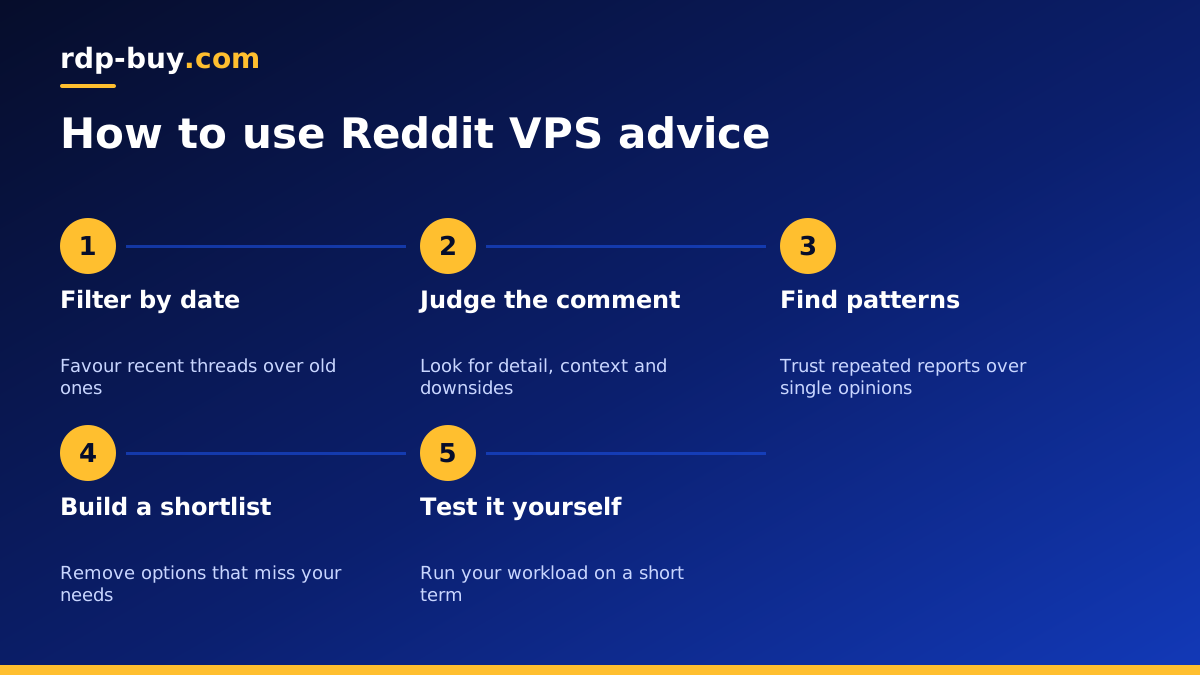
Age. Hosting changes. A glowing comment from several years ago says little about the service today, and neither does an old complaint. Sort by recent posts, and check the date on anything you plan to rely on.
Different needs. A hobbyist running a personal blog judges a provider differently from a business hosting client sites. A plan that is perfect for one can be a poor fit for the other.
Survivor and complainer bias. Happy customers rarely post. Annoyed ones often do. Equally, people may defend a choice they have already made, because nobody enjoys admitting a bad purchase.
Affiliate and undisclosed interest. Not every comment is what it seems. A new account that praises one company across many threads deserves a second look.
Popularity loops. The name mentioned most gets repeated, because people recommend what they have heard recommended. Frequency is not the same as quality.
Missing context. A comment that says fast or terrible, with no location, plan, software or date, gives you very little to work with.
How to judge a single recommendation
When you read a comment, ask yourself these questions:
A comment that passes most of these is worth noting. One that passes none of them is noise, however many upvotes it has.
- Does the writer say what they run on the server?
- Do they say which location and which type of plan they used?
- How long have they used it, weeks or years?
- Do they describe specific events rather than a general feeling?
- Is the post recent enough to reflect the service today?
- Does their account have a normal history, or does it only talk about one company?
- Do they mention downsides? Honest reviews usually do.
Look for patterns, not opinions
One bad story means little, since every provider has unhappy customers. What matters is repetition across different threads and time periods. If several unconnected people describe the same thing, such as slow replies to billing questions, or surprise suspensions with no explanation, treat that as a real signal.
Keep a simple note for each company you see: what people praise, what they complain about, and how recent those comments are. After reading a handful of threads, you will usually see a clear picture of how a company behaves when something goes wrong, and that is the thing you most need to know.
Cheap and best: a common forum trap
Threads about the cheapest best VPS are especially popular, and they deserve extra care. Very low priced plans are often limited offers, sold in small batches, and a recommendation from last year may describe a deal you can no longer buy. Some are also aimed at hobby projects, where an occasional problem costs nothing. That is fine for a personal bot, but it is a different story if a client's site or your income depends on the server.
So before you act on a bargain tip, ask what happens to your project if the server is down for a day. If the answer is not much, a low cost plan may be a good fit. If the answer is lost sales, weigh support and stability above the last bit of savings. Our guide to choosing a low cost VPS goes further on this.
Turn forum research into a shortlist
Reading forums is step one, not the whole job. Use what you learned to make a shortlist, then do the rest of the checking yourself.
Start with your needs. Write down your operating system, the resources your software needs, the location closest to your users, and how you want to pay. Our guide to sizing a server for AI work is a useful example if you are hosting AI tools. Then remove any option that fails those needs, even if forum users love it.
Next, compare the remaining plans properly. Our VPS price comparison method shows how to level costs across sellers, and the buyer's checklist for comparing providers covers non price factors such as support and terms.
Last, ask each seller a real question before paying. A clear, honest reply is one of the best tests you can run, and it takes only a few minutes.
Test it yourself
No thread replaces your own measurements, because your location, software and traffic are unique to you. Take the shortest billing term, install your real workload, and spend a few days with it. Check these items:
If the server passes, move to a longer term with confidence. If not, you have lost very little and you have a real result, which is better than any forum comment.
- Does your software run comfortably within the plan's memory and processor limits?
- Do pages or APIs respond quickly from where your users are?
- Does performance stay steady at busy times of day?
- Does support answer a simple question clearly?
Asking your own question on a forum
If you cannot find a thread that matches your needs, ask one yourself. You will get better replies by giving useful detail. State what you plan to run, the location of your users, the resources you think you need, your rough budget level, and what you have already considered. Read the subreddit's rules first, since some have strict policies on hosting recommendations. Treat every reply with the same care as any other forum comment.
Making your decision
The best VPS provider is the one that suits your workload, your location and your budget, and handles problems well. Forums can help you find what to look out for, but the final choice should come from your own checklist and your own test.
If you want one option to put through that same process, look at our Linux VPS plans. Each includes full root access, a dedicated IPv4 address, 24/7 support and a choice of 33 server locations, and you can start on monthly billing while you test. Budget projects can also start with the cheap VPS range.